Practical guide to staying in downtown Victoria, BC: what the city centre feels like, room types, wellness facilities, breakfast and business amenities, pet policies, accessibility, and how Victoria compares with other Vancouver Island hubs.
Downtown Victoria or elsewhere on Vancouver Island?
Step out onto Government Street just after sunrise and you understand the appeal of a hotel in downtown Victoria. The harbour is a five minute walk, the cafés are already grinding beans, and the city feels compact enough to cross on foot. For a short stay, this is the most practical and atmospheric base in British Columbia’s capital.
Travellers torn between downtown and the wider Vancouver Island coastline should think in terms of rhythm. Downtown Victoria suits those who want to walk from their room to the Inner Harbour, the Royal BC Museum, and the restaurants around Wharf Street without ever calling a taxi. Beachfront resorts and rural retreats, by contrast, trade that immediacy for space, silence, and long drives.
For a first visit, or a quick business trip, a hotel downtown is usually the best choice. You gain time, you gain walkability, and you can still join whale-watching tours or day trips up the Saanich Peninsula. Longer holidays can be split: a few nights in the city, then a move to the wild Pacific coast.
What “downtown Victoria” really feels like
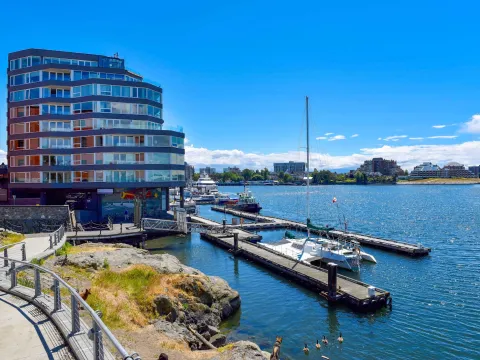
Stand at the corner of Wharf Street and Fort Street and look south. The Inner Harbour curves away, seaplanes lift off in the distance, and most of the city’s higher-end hotels sit within a 600 metre radius. This is not a sprawling centre; it is compact, layered, and easy to learn in a single afternoon.
Streets north of Johnson Street feel more local, with small galleries and casual cafés, while the blocks closer to the water lean into postcard Victoria. Here you find traditional rooms with harbour views, polished lobbies, and the kind of attentive, friendly service that still feels slightly old-world. It is a city centre that rewards walking slowly and looking up.
Noise levels vary more than first-time visitors expect. Hotels facing the Inner Harbour or on quieter side streets tend to offer calmer view rooms, while properties directly on Douglas Street or Yates Street can pick up late-night traffic. If you are sensitive to sound, request a higher floor or a room facing an inner courtyard rather than the main arteries.
Room types, suites and what to expect inside
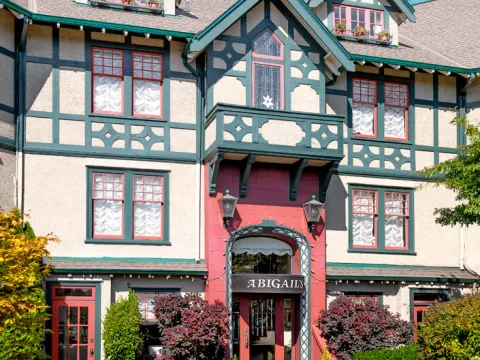
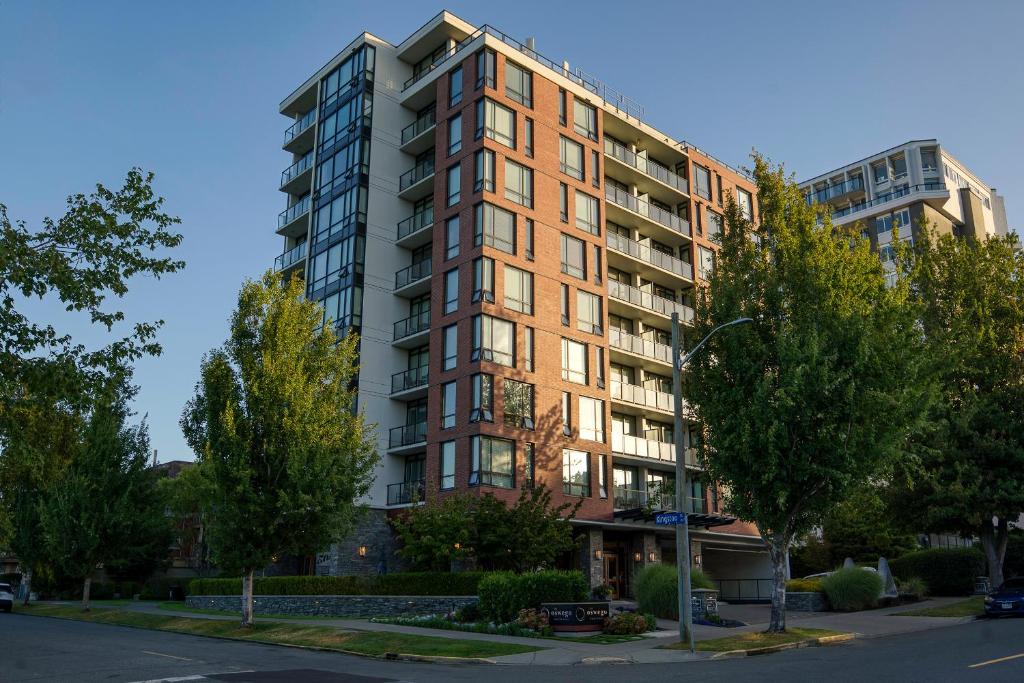
Behind the façades, downtown Victoria hotels divide broadly into two styles. Some lean into traditional rooms with classic furnishings, thick drapes, and a sense of heritage; others favour lighter palettes, clean lines, and a more contemporary city-hotel feel. Both can be excellent, but they suit different travellers and different stays.
If you value space, look for hotel suites or one bedroom layouts rather than standard rooms. These suites in Victoria often add a separate living area, a proper desk for business travellers, and sometimes a small dining table that makes in-room breakfast feel civilised rather than improvised. Families or longer stays benefit most from this extra square metre count.
View matters. Some of the best rooms face the Inner Harbour or the city’s low-rise skyline, while others look onto alleys or neighbouring roofs. When you book, pay attention to the room description: “harbour view”, “city view rooms”, or “courtyard” are not interchangeable. If a view is a priority, it is worth choosing a clearly labelled category rather than hoping for an upgrade or exclusive offers on arrival.
Wellness, fitness and hotel spa culture in Victoria
After a day walking from the Parliament Buildings to Chinatown and back, a well-designed fitness centre or a calm hotel spa stops being a luxury and becomes a necessity. Many downtown properties now include compact but well-equipped fitness rooms, usually with a mix of cardio machines and free weights. Serious training is possible, but you will not find sprawling resort gyms here.
Spa facilities vary widely. Some hotels offer only treatment rooms and a relaxation lounge, while others create a fuller wellness circuit with steam rooms or small pools. If a spa day is central to your stay, verify what “spa access” actually includes before you commit. In Victoria, the focus tends to be on quality of treatment rather than sheer size of the facility.
Wellness also extends to quieter details: natural light in the fitness area, the option of in-room massage, or a calm corner where you can stretch after a run along the harbour path. Travellers who prioritise health should look for properties that describe their fitness and spa offering clearly, rather than relying on vague language about relaxation.
Breakfast, business needs and practical comforts
Mornings in downtown Victoria are shaped by choice. Some hotels include a full breakfast in the room rate, others offer it à la carte, and a few skip it entirely in favour of partnering with nearby cafés. If you like slow starts, a proper on-site breakfast room or restaurant is worth seeking out; if you prefer to explore, you are rarely more than a three minute walk from a good coffee on Fort Street or Blanshard Street.
Business travellers should look beyond the lobby aesthetic and focus on function. Meeting rooms, quiet corners for informal catch-ups, and reliable dry cleaning or laundry services matter more than decorative flourishes. Properties close to the government district around Belleville Street are particularly convenient for official visits and conferences.
Small, thoughtful touches often define the best city stays. A genuinely friendly front desk that remembers your early departure, a late check-out offered without fuss, or a simple, well-organised room layout that makes packing and repacking easy. These details rarely appear in glossy photos, but they shape how you feel when you close the door at night.
Pet policies, accessibility and choosing the right profile of hotel
Travelling with a dog changes the equation. Some downtown Victoria hotels are explicitly pet friendly, with designated floors or rooms and clear rules about where animals can and cannot go. Others do not accept pets at all. If your companion has four legs, confirm the policy and any restrictions on size or number of animals before you finalise your stay.
Accessibility is another area where you should not assume. Elevators are standard, but the age of some buildings means that room layouts, bathroom access, and corridor widths can differ significantly from one property to another. Guests with mobility considerations should prioritise newer constructions or recently renovated floors, where design standards tend to be more consistent.
Ultimately, the best hotel for you in downtown Victoria depends less on star ratings and more on your priorities. Harbour views or quiet back streets. Traditional charm or clean-lined modernity. A compact base for business, or a more spacious suite that feels like a temporary apartment in the heart of British Columbia’s capital.
How downtown Victoria compares to other British Columbia city centres
Compared with downtown Vancouver, Victoria’s centre feels more intimate and walkable. Distances are shorter, traffic is lighter, and you can move from the Inner Harbour to the shopping streets and back to your room in under 15 minutes on foot. For travellers who dislike constant taxis, this is a clear advantage.
Against other Vancouver Island towns, Victoria stands out for its concentration of full service hotels in a tight radius. You find a higher density of properties with fitness facilities, meeting rooms, and a range of room categories, from compact city rooms to larger suites designed for longer stays. Smaller island communities rarely offer this breadth.
For many visitors, the ideal British Columbia itinerary pairs Victoria’s downtown with at least one contrasting destination: perhaps the surf beaches near Tofino, or the vineyards of the Cowichan Valley. Think of your Victoria hotel as the urban anchor of the trip, a place where you can return to a well-made bed, a considered breakfast, and the quiet pleasure of watching the harbour lights before sleep.
Is downtown Victoria a good area to stay for first-time visitors?
Yes, downtown Victoria is an excellent base for first-time visitors because most major sights, including the Inner Harbour and key museums, sit within easy walking distance, and the area offers a dense choice of hotels, restaurants, and services in a compact, navigable centre.
What should I look for when choosing a hotel in downtown Victoria?
Focus on three things: the exact location in relation to the Inner Harbour and main streets, the type of room or suite you prefer, and the facilities that matter to you, such as fitness areas, spa services, breakfast options, or meeting rooms if you are travelling for business.
Is downtown Victoria walkable from most hotels?
Downtown Victoria is highly walkable, and most hotels in the central area are within a 5 to 15 minute walk of the harbour, government buildings, and main dining streets, which makes it easy to explore without relying heavily on taxis or public transport.
Are there good options for travellers with pets in downtown Victoria?
Several downtown properties are pet friendly and offer designated rooms or floors for guests with animals, but policies vary, so it is important to verify pet acceptance, any size limits, and possible restrictions on where pets can accompany you inside the building.
Is downtown Victoria better for business trips or leisure stays?
Downtown Victoria works well for both business and leisure; business travellers benefit from proximity to government and corporate offices and access to meeting spaces, while leisure guests enjoy being close to the harbour, cultural attractions, and the city’s main dining and shopping streets.