Quebec City · Hotels
Hôtel Marie-Rollet
What convinced us is the story behind the address: a Victorian mansion raised in 1876...
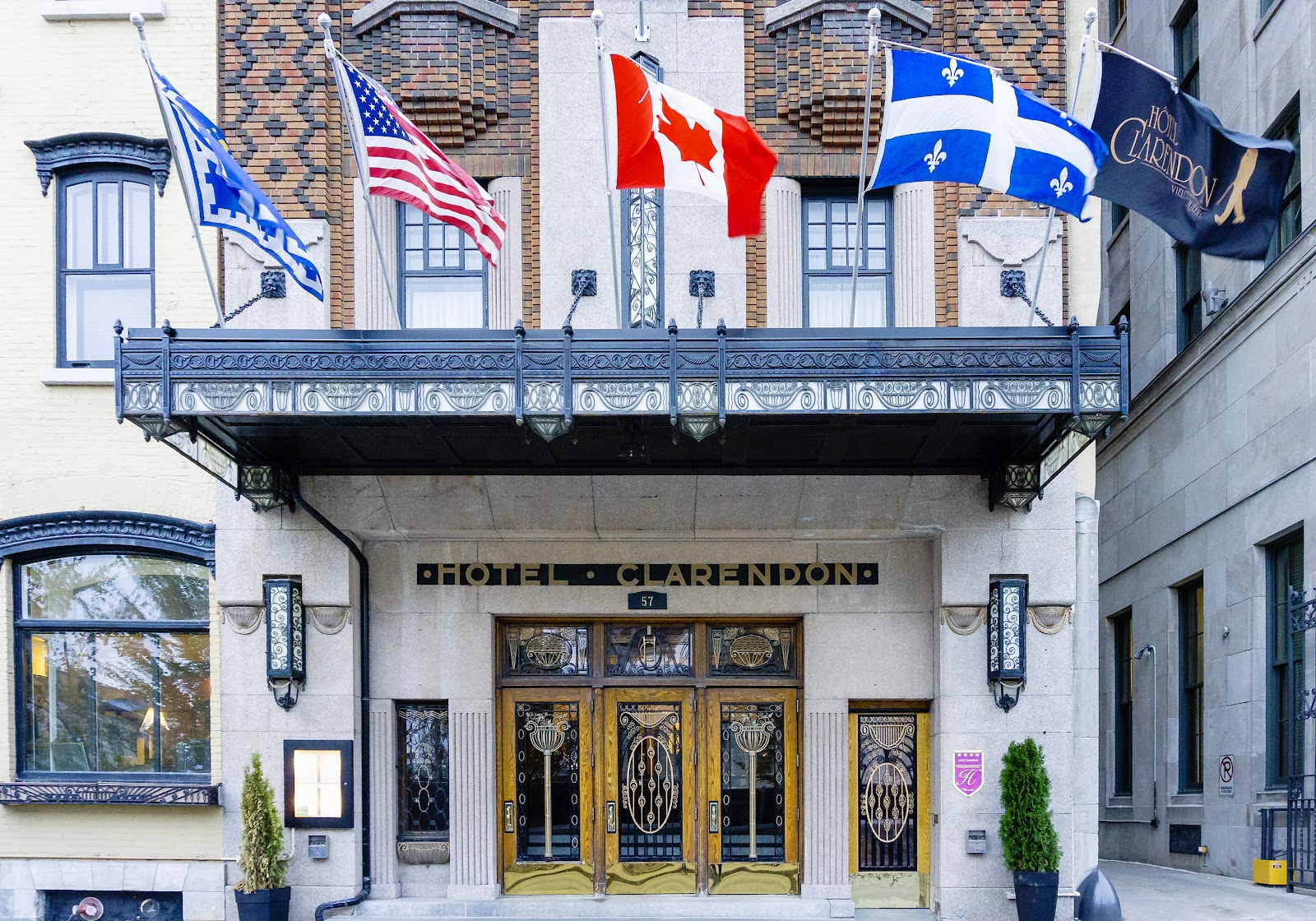
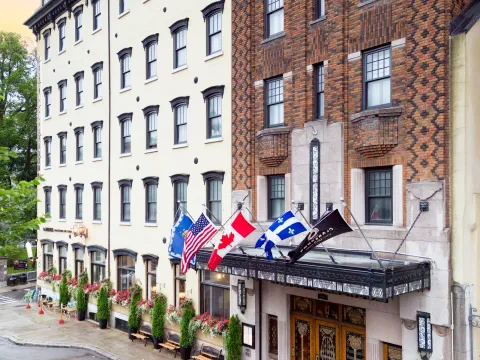
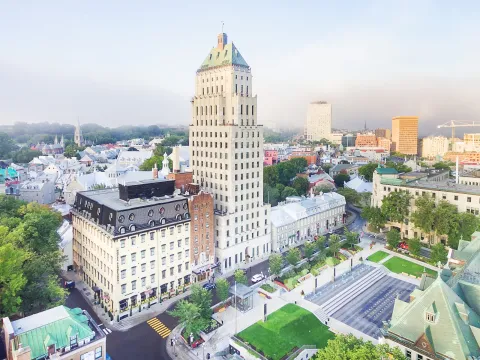
The Clarendon traces back to 1858, when architect Charles Baillairgé designed an Italian neo-Renaissance building on this site, converted into a hotel called Clarendon House in 1870 under owner Georges-Édouard Desbarats. It has operated continuously ever since, making it Quebec City's oldest working hotel. In 1926 and 1927, architect Raoul Chenevert added a seven-storey Art Deco extension that doubled the room count from 40 to roughly 90, and the join between the two eras, Italianate stone below, Art Deco ironwork above, is still legible on the facade today.
We selected the Clarendon because it carries Old Quebec's history without performing it: the hotel sheltered international journalists during the 1943 Quebec Conference, the same gathering that brought Churchill and Roosevelt to the Château Frontenac a few streets away, and it has quietly housed Quebec's anglophone families on winter visits for generations. The result is a property with genuine civic standing that has never needed to shout about it.
Rue Sainte-Anne sits inside the walls of Old Quebec, close enough to the Château Frontenac and Dufferin Terrace to reach either on foot in minutes, with the Anglican cathedral directly across the street. The location trades the Frontenac's postcard profile for a quieter, more residential corner of the old town, within easy walking distance of Place d'Armes, the Petit-Champlain shopping streets, and the city's ramparts.
Prix : Premium
Vibe : historic, understated, Old Quebec residential
Chambres : around 90, split between the original wing and the 1926 Art Deco addition
Best For : history-minded travellers who want Old Quebec without the busiest address in it
Our Favorite Thing About the Hotel : the visible join between the 1858 Italianate facade and the 1926 Art Deco wing
Dining : Brasserie les Mordus, built around fish and seafood with local ingredients
Amenities : historic public rooms, central Old Quebec address, on-site dining
Attractions : Château Frontenac and Dufferin Terrace, Place d'Armes, Petit-Champlain, the city ramparts
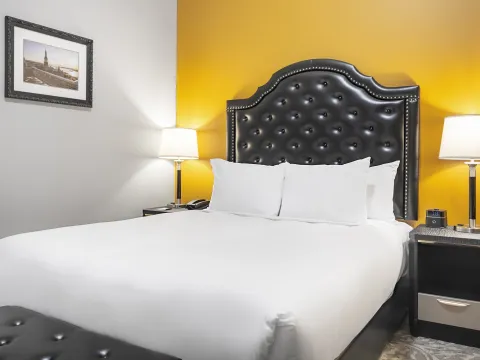
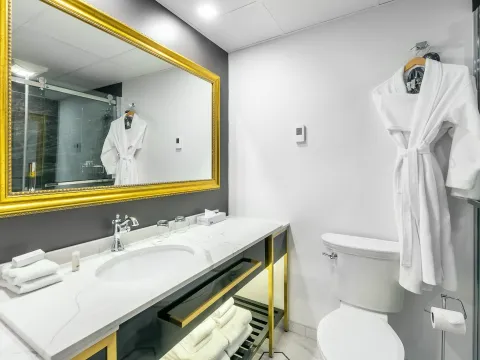
Rooms in the original wing carry the lower ceilings and thicker stone walls of the 1858 structure, while those in the 1926 Art Deco addition open onto taller windows and the cleaner lines that defined the style. Neither wing tries to erase its age with heavy renovation, so the building reads honestly as two eras joined rather than one seamless whole, a rarer thing in a city this carefully preserved.
The hotel's restaurant, formerly Charles-Baillargé and reopened in 2019 as Brasserie les Mordus, leans into fish and seafood built around local ingredients, continuing a dining tradition on this site that stretches back to 1984. It gives the hotel a reason to be visited by Quebec City residents, not only its overnight guests.
The Clarendon suits travellers who want to feel Old Quebec's weight of history without staying inside its most photographed building: expect a quieter, more local-feeling stay than the Frontenac, with comparable proximity to the old town's landmarks. Anyone chasing grand public spaces and turret views should book the castle instead; anyone who wants history at a human scale will be better served here.
What convinced us is the story behind the address: a Victorian mansion raised in 1876...
We chose this address because it solves Old Quebec's usual trade-off: a heritage address at...
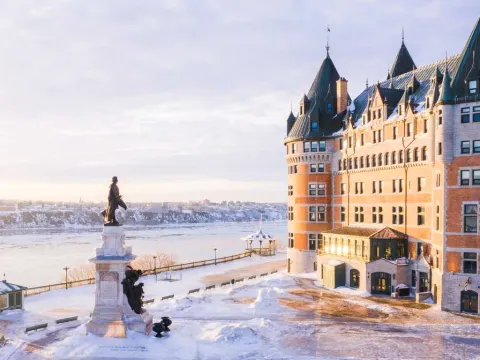
We chose Le Château Frontenac because no hotel in Canada carries quite its weight of...