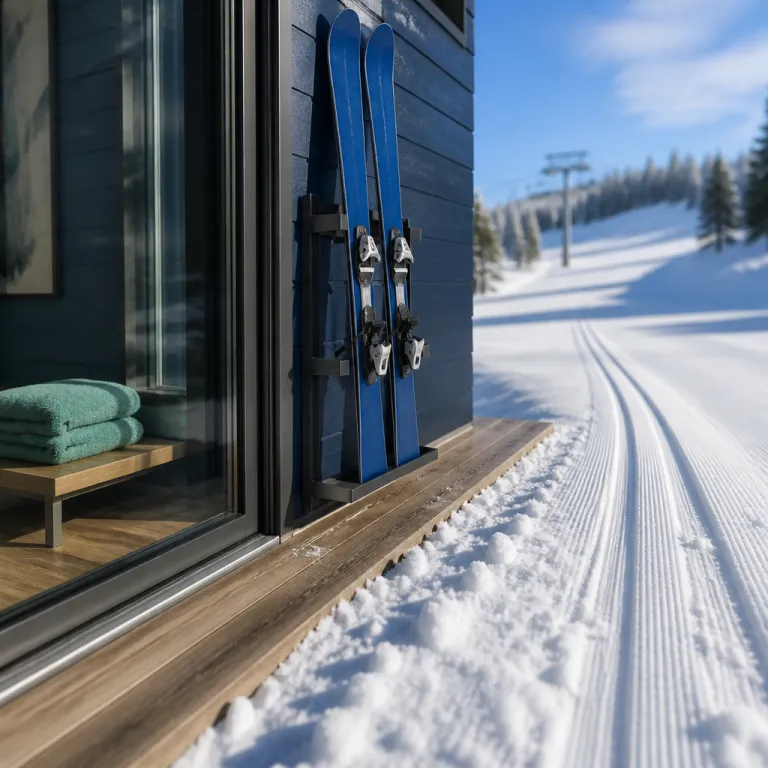
Section 1 – What ski in ski out lodging means for a luxury winter escape
True ski in ski out lodging means you can step outside and glide straight onto a snow covered slope within a few seconds, not after a long walk through the village. For luxury travelers asking what is ski-in ski-out lodging, it describes a refined property with direct ski access to groomed runs, without shuttles, parking lots, or busy road crossings. In practical terms, you ski directly back to your lodging at the end of the day, often right to a dedicated ski door beside the private ski room where you unclip your boots and hang your gear.
Resort operators define this accommodation style very precisely, because affluent guests value seamless slope access and are willing to pay a premium for it. One expert explanation from a North American resort training guide states, “What defines ski-in ski-out lodging? Accommodations with direct access to ski slopes without need for transportation.” That same expert adds, “Are all ski-in ski-out lodgings the same? No, definitions vary; some may require short walks to lifts or brief traverses along connector trails.” These internal guidelines, used in staff training at major North American resorts, emphasize that any walking distance or traverse should be clearly disclosed in guest facing descriptions.
For travelers planning a Canadian ski vacation, understanding what ski means in this context is essential for setting expectations before you book. Some luxury ski properties sit slopeside, where you clip into your ski boots on a heated terrace and push off directly toward the lifts in under a minute. At Whistler Blackcomb, for example, several upper village residences allow guests to ski from a gear room door to the Lower Cruiser or Village Run in roughly 30–60 seconds, depending on snow conditions. Others market themselves as lodging ski friendly, yet require a short walk of 100–300 meters across a village street or plaza before you reach the main slopes or gondola.
When you read a listing on a premium Canadian booking website, look carefully at how the ski lodging is described and how specific the wording feels. Phrases such as “direct slope access,” “ski directly from the property,” or “20–30 seconds from ski room to snow” usually indicate genuine ski access, while “short walk to the slopes” or “5-minute stroll to the base” suggests a more indirect experience. The difference matters if you want to maximize winter daylight hours and minimize time spent carrying gear through a crowded base village or waiting for shuttles.
Luxury ski homes and penthouse vacation rentals in Canada often mirror the standards seen in destinations like Snowmass or Beaver Creek. In Snowmass, for example, resort planning materials and tourism statistics frequently note that around 90–95% of accommodations are marketed as ski in ski out, illustrating how a resort can be designed around direct slope access for most guests (figures commonly cited in GoSnowmass visitor information and lodging overviews). Many Canadian resorts now benchmark their slope access against that model. For discerning guests, the answer to what is ski-in ski-out lodging is simple; it is a promise that the mountain begins at your door and that every ski day starts and ends without logistical stress or wasted time in transit.
Section 2 – How to verify genuine ski access on a Canadian booking website
Before you commit to a premium reservation, you should verify exactly what ski access you are paying for and how it works in real conditions. Luxury listings often highlight that you can ski directly from the property, but the fine print may reveal stairs, internal corridors, or a walk through the village before you reach the first slope. When you compare options, treat the phrase ski in ski out lodging as a starting point, not a guarantee, and look for measurable details such as distance in meters or estimated time to the nearest lift.
Begin by studying the resort map and the photos that show how the lodging relates to the slopes. Look for clear images of the slope access route, including any paths, ski doors, or bridges that connect the building to the mountain. A reliable listing might show a map snippet with the residence circled and an arrow pointing to the adjacent run, or a winter photo taken from the ski room door looking directly at the groomed trail. If the listing claims slopeside convenience, you should be able to read the visual story of how your ski boots move from the ski room to the snow without ambiguity.
Next, examine the written description of the ski lodging with the same care you would give to bedrooms bathrooms details. A precise listing will explain whether you exit through a dedicated ski door, cross a groomed trail, and then slide gently down to a lift, often specifying that the first chair is less than a two-minute glide away. At Banff Sunshine Village, for instance, on-mountain hotels describe how guests leave the ski locker area, walk less than 20 meters to the snow, and then ski a short green pitch to the Strawberry or WaWa lifts. If the text only mentions that the property is “near the slopes,” “close to the base village,” or “within walking distance of the gondola,” you may be looking at lodging ski adjacent rather than true ski in ski out lodging.
Guest reviews are another powerful way to understand what ski access really feels like in winter conditions. Travelers often comment on how long it took to reach the first slope, how easy it was to return in the afternoon, and whether they could ski directly back to the building. Typical remarks include, “We were on the run in under a minute from the boot room,” or “We had to carry skis for about five minutes through the village each morning.” When several reviews mention carrying gear through the village or waiting for a shuttle, you can safely assume the ski vacation experience is less seamless than the marketing suggests.
For travelers who enjoy combining Canadian ski properties with iconic United States destinations, it can be helpful to compare standards with well known resorts such as Park City, Deer Valley, Beaver Creek, or Snowmass Village. A detailed guide to the best Colorado resorts for adventure seekers planning refined stays, available through a specialized luxury travel editorial, illustrates how top tier North American resorts describe slopeside lodging and vacation rentals, often including exact distances to lifts and typical ski-in routes. Use that benchmark when you read Canadian listings, and you will quickly see which properties truly deliver the ski in ski out lodging experience you expect.
Section 3 – Inside a luxury ski in ski out stay in Canada
Once you have clarified what is ski-in ski-out lodging, you can focus on the interior comforts that define a premium Canadian winter escape. High end ski homes and condominiums usually specify how many guests the property sleeps, how many bedrooms bathrooms are available, and how the living spaces frame the mountain views at sunrise and sunset. These details matter because they shape how your ski vacation feels from the first morning coffee to the final evening by the fire, especially when several generations share the same slopeside address.
In a refined slopeside residence, you often find a dedicated gear room where ski boots, skis, and snowboards are stored on heated racks and ventilated shelves. From this space, a short corridor of just a few meters leads to a ski door that opens directly onto a groomed slope or a gentle access trail. That simple transition from warm interior to crisp winter air is the essence of ski in ski out lodging, and it is what separates these properties from standard vacation rentals in the village that require elevator rides, street crossings, or shuttle stops before you reach the snow.
Well designed ski lodging in Canada also pays close attention to wellness amenities that help you recover after a demanding day on the slopes. Private hot tubs on terraces, shared hot tub courtyards, and indoor spa zones allow you to soak tired muscles while watching the last skiers descend the mountain. When multiple hot tubs are available in a single complex, guests can choose between a quiet corner for relaxation and a livelier space for socializing, often with views of the illuminated base village or the last chairlifts spinning in the distance.
Many luxury Canadian ski properties now compete directly with renowned destinations such as Snowmass Village or Beaver Creek by offering concierge services tailored to winter travelers. These services might include pre heated ski boots each morning, in suite fittings for rentals, and curated experiences that help you explore the wider resort beyond the immediate slope access, such as guided snowshoe tours or private sleigh rides. A detailed editorial on luxury ski resorts in Canada, focused on refined winter escapes and premium experiences, highlights how these services elevate a standard ski vacation into a fully orchestrated mountain retreat where every transition from slope to suite feels intentional.
When you read a listing on a Canadian luxury booking platform, pay attention to how the property description balances technical details with sensory language. A strong listing will explain what ski access looks like step by step, while also evoking the feeling of gliding back to your lodging as the village lights glow below and steam rises from the hot tubs on neighboring balconies. That blend of clarity and atmosphere is a reliable sign that the host understands both the practical and emotional dimensions of ski in ski out lodging.
Section 4 – Comparing Canadian ski in ski out stays with global icons
Travelers who already know what is ski-in ski-out lodging from visits to Snowmass or Park City often arrive in Canada with high expectations and clear reference points. They have experienced ski properties where you can ski directly from the terrace, where the base village is a short glide away, and where every detail of slope access has been engineered for ease, from heated pathways to clearly marked return trails. Canadian resorts have responded by refining their own ski lodging standards to compete on a global stage and appeal to these well traveled guests.
In destinations such as Whistler, Banff, and Mont Tremblant, premium lodging ski options now mirror the best practices seen in Snowmass Village or Beaver Creek. Many properties offer ski in ski out lodging with heated pathways, covered ski doors, and clearly marked routes that guide you from the gear room to the slopes, often with wayfinding signs visible even during heavy snowfall. These features ensure that even on the coldest winter day, the transition from suite to slope remains comfortable, intuitive, and efficient for skiers of different ability levels.
One key difference between Canadian ski homes and some international vacation rentals lies in how the surrounding village is integrated into the experience. In Canada, planners often design the base village so that slopeside properties sit within a short glide of restaurants, spas, and galleries, sometimes less than a five-minute ski or walk away. This layout allows guests to enjoy both direct ski access and easy cultural exploration without sacrificing the privacy of their mountain facing lodging or the quiet of an evening by the fire.
Another comparison point is how many guests each property sleeps relative to its amenities. High end Canadian ski properties frequently combine generous bedrooms bathrooms configurations with multiple hot tubs, large dining areas, and flexible living spaces that can be adapted for work, play, or quiet reading. This balance makes it easier for multi generational families or groups of friends to share a single ski vacation home while still enjoying personal space, whether that means a private balcony overlooking the slopes or a media room tucked away from the main great room.
For travelers who appreciate heritage and design, some Canadian mountain hotels now align their service philosophy with landmark properties such as the Rimrock in Banff, which has been profiled as part of a prestigious luxury collection in North America. When such hotels offer ski in ski out lodging or very close ski access, they create a compelling alternative to private vacation rentals. Guests can enjoy the convenience of slopeside living while benefiting from full service hospitality, including concierge teams who understand exactly what ski guests need at every stage of their stay, from arranging lift tickets to scheduling late checkouts after a final morning on the mountain.
Section 5 – Planning your Canadian ski vacation around true slopeside access
When you start planning a Canadian ski vacation, it helps to structure your decisions around the rhythm of a typical ski day rather than just the headline resort name. Think about how you want to wake up, how quickly you wish to reach the first slope, and how you prefer to return to your lodging after the lifts close. The clearer your vision, the easier it becomes to evaluate what is ski-in ski-out lodging in practical terms and to decide whether a particular address truly fits your style.
Begin by listing your priorities for ski access, interior comfort, and après ski amenities. If you value maximum time on the slopes, prioritize properties that allow you to ski directly from a ski door beside the gear room, rather than those that require a walk through the village or a shuttle ride. If you care more about spa facilities and hot tubs, you might accept slightly less direct slope access in exchange for a more extensive wellness offering, such as a full service spa, multiple pools, or a fitness studio with mountain views.
Next, consider how many people your chosen property sleeps and how the bedrooms bathrooms layout supports your group. Families with young children often prefer ski lodging where the kids’ rooms sit close to the main living area, making it easier to manage early bedtimes after a long winter day and quick departures for ski school in the morning. Groups of adults may prioritize equal sized suites and multiple hot tubs, so everyone can unwind in comfort after skiing without competing for the best room or the warmest corner of the terrace.
Equipment logistics also shape the quality of your ski in ski out lodging experience. Look for properties that provide dedicated storage for ski boots and skis, ideally with boot warmers, benches, and hooks that make it easy to gear up before stepping onto the slope. When rentals can be delivered directly to your lodging and fitted in your living room or gear room, you avoid queues in the base village and gain more time to explore the mountain, especially on arrival day when energy levels are high and daylight is limited.
Finally, align your expectations about what ski access means with the specific resort layout you choose in Canada. Some mountains offer long green runs that lead gently back to most slopeside properties, while others require more advanced terrain to reach certain ski homes or condominiums. By reading detailed trail maps and property descriptions together, and noting which runs remain open late in the season, you can ensure that your chosen ski in ski out lodging truly supports the kind of ski vacation you envision, from first chair to final run.
Section 6 – Practical tips for evaluating premium ski lodging listings
Luxury travelers often browse dozens of listings before selecting the right ski in ski out lodging for a Canadian winter escape. To make this process efficient, approach each property description with a structured checklist that focuses on ski access, interior layout, and wellness features. This method helps you compare very different ski properties on equal terms and quickly eliminate options that do not match your expectations.
Start with the headline claims about what is ski-in ski-out lodging in that specific resort. If the listing states that you can ski directly from the property, look for supporting details such as photos of the slope access route and clear references to a ski door or dedicated ski room, ideally with approximate distances or times. When such evidence is missing, treat the claim cautiously and consider contacting the host for clarification with specific questions like, “How many minutes from the boot room to the nearest lift?”
Then, examine how the listing describes the number of guests the property sleeps and how the bedrooms bathrooms are arranged. A well written description will explain which rooms face the mountain, which open onto terraces with hot tubs, and how common areas connect to the gear storage zone so that wet boots do not pass through the main living room. These details reveal whether the lodging ski layout supports both privacy and conviviality during your ski vacation, and whether the flow of people and equipment will feel effortless or cramped.
Pay attention to how the host addresses winter specific concerns such as snow management, lighting, and safety on the slopeside paths. Properties that mention heated walkways, well lit routes to the base village, and clear signage for ski access usually reflect thoughtful planning and investment. Such features are especially valuable when you return to your ski lodging after sunset, during heavy snowfall, or with children who may be tired after a full day on the mountain.
Finally, consider how the overall narrative of the listing aligns with your understanding of what ski means in a luxury travel context. A strong listing will integrate references to the mountain, the village, the slopes, and the daily flow from gear room to hot tub in a way that feels coherent and inviting, rather than relying on vague superlatives. When you find a property where every element of the description supports a seamless ski in ski out lodging experience, you can book with confidence that your Canadian winter escape will feel both effortless and memorable.
Key statistics on ski in ski out lodging
- In Snowmass, resort planning documents and tourism summaries often report that roughly 90–95% of accommodations are marketed as ski in ski out, illustrating how a resort can be designed around direct slope access for most guests (figures widely referenced in GoSnowmass lodging information and destination planning materials).
- Resort operators consistently report, in internal revenue analyses and industry conference presentations, that ski in ski out lodging commands higher nightly rates than comparable non slopeside properties, reflecting strong demand for direct ski access among affluent travelers who value time on the mountain over time in transit.
- Guest satisfaction scores for accommodations with genuine ski in ski out lodging typically exceed those for shuttle based properties in post stay surveys, because reduced transit time translates into more hours spent on the mountain each winter day and less frustration with logistics.
- Luxury ski homes that combine ski in ski out lodging with private hot tubs and generous bedrooms bathrooms layouts tend to achieve higher occupancy across the winter season, as they appeal to both families and multi generational groups seeking a single base for their ski vacation.
FAQ about ski in ski out lodging
What defines ski in ski out lodging at a mountain resort ?
Ski in ski out lodging is defined as accommodation with direct access to ski slopes, allowing guests to reach and leave the runs without using vehicles or shuttle buses. In practice, this usually means a short glide from a ski door or terrace to a groomed trail or lift, often in under two minutes. The key element is that you can ski directly between the property and the mountain throughout your vacation, even in typical winter weather.
Are all ski in ski out lodgings the same quality of access ?
Not all ski in ski out lodging offers the same level of convenience, even within a single resort. Some properties sit immediately slopeside, while others require a short walk or a short ski along a connecting trail before you reach the main slopes. When you evaluate listings, look for precise descriptions of the route from the lodging to the first lift, including estimated time, terrain difficulty, and whether the return trail remains open all season.
Is ski in ski out lodging usually more expensive than other options ?
Yes, ski in ski out lodging generally commands a premium price compared with similar properties that rely on shuttle or car access. Travelers are willing to pay more for the ability to ski directly from their accommodation and return without logistical effort, especially during peak hours. This price difference is especially noticeable during peak winter periods and in resorts with limited slopeside inventory or high demand from international guests.
How can I confirm that a property truly offers ski in ski out access ?
You can confirm ski in ski out lodging by checking resort maps, studying photos that show the building in relation to the slopes, and reading guest reviews that describe the daily routine in concrete terms. Look for mentions of a dedicated ski door, a groomed access trail, or the ability to ski directly back to the property without removing your skis. If the information is unclear, contact the host and ask specific questions about the route to and from the mountain, including approximate distance and whether any roads or stairs are involved.
What should I prioritize when choosing ski in ski out lodging for a family trip ?
For family trips, prioritize safe and simple ski access, a layout that clearly indicates how many guests the property sleeps, and practical amenities such as gear storage and hot tubs. Choose ski lodging where children can reach beginner friendly slopes without navigating busy roads or complex village routes, and where the return path is well lit and clearly marked. A thoughtful combination of direct slope access and comfortable interiors will make your winter vacation smoother for every family member, from first time skiers to seasoned experts.